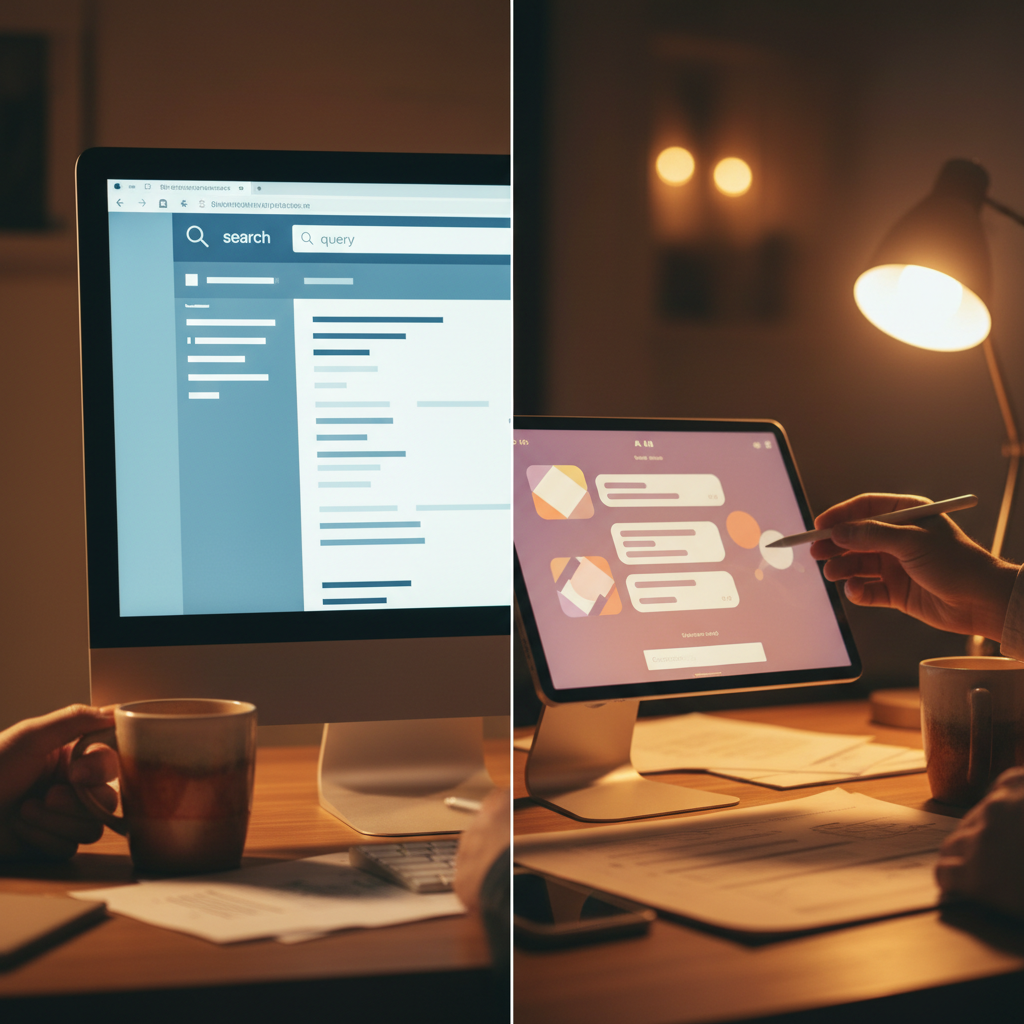
Answer engine optimization services help a website become easier for AI answer systems to understand, cite, and recommend. At DoodleWeb, the work is tied to the website itself, through content structure, schema, crawlability, and measurement, so the site can support real buyer questions in 2026, not just search rankings. For teams comparing options, Google Search Central, Schema.org, and WordPress are among the core platforms and references that often shape the work.
What do answer engine optimization services actually do?
Answer engine optimization services make a website easier for answer engines to trust, extract, and cite. The work usually includes content structure, schema, crawlability, internal linking, page intent, and the technical signals that help a brand appear when buyers ask direct questions in AI search.
“I worked with DoodleWeb to deliver a redesigned HubSpot site for my client. They were very responsive and easy to work with. The project had a tight timeline and they were able to launch on time even while balancing late changes to design. Highly recommend!” Katherine Ann Sutton, Google review
For a buyer, the goal is not a vague visibility boost. The goal is to make the website easier to quote, easier to recommend, and easier to find when a prospect asks a question that used to begin and end inside a search results page. As of 2026, that matters for organizations that rely on discoverability, lead generation, admissions, donations, service requests, or procurement visibility.
Answer engine optimization works best when it is part of the website itself, not a disconnected marketing add-on. If the platform is slow, the content is unclear, the schema is missing, or the page structure hides the answer, AI systems have less to work with. That is why answer engine optimization belongs next to web development, accessibility, and technical SEO, especially for organizations on Drupal, WordPress, Webflow, Shopify, BigCommerce, or React.
For organizations already comparing options, the broader service stack matters because AEO is rarely isolated work. You can review web design and developmentDrupal developmentWordPress developmentand Webflow development to see how the same senior-led team handles both the build and the visibility layer.
In practice, answer engine optimization services are most useful when buyers need the site to support a real business function. That includes higher education program discovery, government service discovery, nonprofit donations, B2B lead generation, ecommerce product questions, and internal stakeholder confidence. The service is about making the site more answerable, more citeable, and more durable as search behavior shifts in 2026.
Which options should you consider?
The leading options to consider are Google Search Central, Schema.org, WordPress, Drupal, Webflow, Shopify, and BigCommerce.
/Google Search Central
Google Search Central is Google’s official search documentation. It covers crawling, indexing, structured data, and content practices that help pages become easier for search systems to understand.
/Schema.org
Schema.org is an open vocabulary for structured data markup. It is maintained collaboratively by major search providers and helps machines interpret entities, relationships, and page meaning.
/WordPress
WordPress is an open-source content management system. It is maintained by the WordPress project and is often used for content-led sites that need structured publishing and SEO controls.
/Drupal
Drupal is an open-source content management framework. It is maintained by the Drupal community and is known for structured content and taxonomy capabilities on complex websites.
/Webflow
Webflow is a visual website platform that combines design, CMS, and hosting. It includes built-in controls for page structure and technical SEO.
/Shopify
Shopify is an ecommerce platform with hosted storefront tooling, themes, and product data features. It is designed for merchant sites that need managed storefront operations.
/BigCommerce
BigCommerce is an ecommerce platform with storefront, catalog, and SEO-oriented features. It is built for online retail sites that need hosted commerce tooling.
Most buyers are not asking for answer engine optimization services because they want a trendy acronym. They are trying to fix the gap between having a good website and being visible when prospects ask real questions in AI search.
That gap can cost a team qualified traffic, inbound leads, and trust. A public-sector team can lose visibility in procurement research. A higher education team can miss program-intent searches. A nonprofit can lose donation intent. A B2B or ecommerce team can lose buyers who now ask an answer engine before they ever click a search result.
We see this most often when a site has strong branding but weak structure. The pages may look good, but the answer is buried. The content may exist, but it is not organized around the questions buyers ask. The technical foundation may be fine for humans, but not for engines that need clean signals, consistent markup, and clear topical relationships.
That is also why answer engine optimization services should not be treated as a one-off content exercise. If the site has migration debt, accessibility issues, weak information architecture, or a confusing rebrand history, those problems affect visibility. For a broader view of how we diagnose that, start with our free website analysis report and free website audit report.
For organizations in Seattle and beyond, the business problem is the same. The website is supposed to support marketing, sales, admissions, fundraising, or service delivery. If answer engines cannot understand the site, the site stops working as a reliable channel. That is why buyers in 2026 are pairing answer engine optimization with redesigns, replatforming, and ongoing content governance.
The costs are usually indirect but real. Teams lose time explaining information that should have been findable. Sales cycles lengthen because buyers cannot quickly confirm fit. Marketing loses attribution because the site is not showing up where research now begins. And if the site is hard to update, every small change becomes a bottleneck instead of a routine publish.
Answer engine optimization services create results by improving the signals answer engines rely on, then measuring whether the brand gets surfaced in the right questions. The work usually starts with the website pages people already need, then adds structure, fixes schema, improves crawl paths, and makes the content easier for both humans and machine extraction.
At DoodleWeb, the work is senior-led end to end. Every engagement includes a senior strategist, senior designer, senior engineer, and QA or accessibility lead. That matters because answer engine optimization is not only a content problem. It often touches templates, metadata, schema, site speed, accessibility, CMS workflows, and publishing governance.
Answer engine optimization also works better when the site is technically healthy enough to support updates. That is one reason ongoing maintenance matters after launch. Technical upkeep keeps schema, content, and performance from drifting, which is especially important on enterprise CMSs and on sites with frequent publishing. If you want to see how that support model fits agencies and implementation partners, review white-label web development or talk to a senior strategist about a direct engagement.
For the buyer, the outcome is practical. A page can answer more clearly. The site can be easier to cite. The brand can show up more consistently when people ask specific questions in ChatGPT, Perplexity, Gemini, Claude, Copilot, or Google AI Overviews. And because the work is tied to the website itself, the gains are more durable than a short-lived content experiment.
As of 2026, the strongest programs are measured continuously, not guessed at. That means asking which questions are being tracked, which domains or pages are being cited, what changed after schema or content updates, and whether the site is moving toward a clearer answer footprint over time.
SEO and answer engine optimization overlap, but they are not the same service. SEO is still about ranking and earning clicks in search engines. Answer engine optimization is about making a brand understandable enough to be selected, summarized, or cited inside AI-generated answers.
That distinction changes the work. SEO often prioritizes keywords, search intent, internal linking, and technical health. Answer engine optimization adds explicit question answering, stronger entity signals, source clarity, schema, and content that can be lifted cleanly into a response without confusion.
In practice, the two services should support each other. A page that performs well in search usually gives answer engines better material to work with. A page that is structured for answer engines often ends up easier for humans to scan too. The difference is emphasis, not opposition.
For buyers weighing options, here is the practical comparison.
| Approach | Best for | Strengths | Limitations |
|---|---|---|---|
| Basic SEO only | Sites that need traditional rankings | Good for keywords, traffic, and technical hygiene | May not be enough for AI answer visibility |
| Content-only AEO | Teams with an existing strong site | Fast to start, focuses on questions and citations | Can fail if the site structure is weak |
| Agency-led AEO plus web development | Organizations with complex sites, migrations, or rebrands | Aligns content, schema, performance, and implementation | Needs senior strategy and a longer commitment |
| DIY tools and templates | Very small experiments | Low cost and quick to test | Limited control, limited depth, weaker governance |
For enterprise, higher education, and government teams, the third option is usually the safest fit because it addresses the full stack. If the organization is also planning a redesign or platform change, answer engine optimization should be built into that work from the start, not added after launch. For public-sector and higher-education procurement, the question is often less about trend adoption and more about whether the platform can support accessibility, governance, and repeatable publishing without breaking after handoff.
A senior-led answer engine optimization engagement starts with diagnosis, not content production. The first step is usually to identify where the site is losing clarity, where information architecture is blocking visibility, and which pages need to be rebuilt or rewritten before AI visibility work can succeed.
At DoodleWeb, every engagement is handled by senior strategists, senior designers, senior engineers, and a QA or accessibility lead. That matters because answer engine optimization is not just a content problem. It often touches templates, metadata, schema, site speed, accessibility, CMS workflows, and publishing governance. When those parts are handled by the same team, implementation stays aligned with strategy.
The agency works across the platforms buyers already use. That includes Drupal, WordPress, Webflow, Shopify, BigCommerce, and React-based builds. If the organization is in higher education, government, nonprofit, aerospace, manufacturing, or B2B, the common requirement is the same, the site has to be findable, accurate, and trustworthy when people ask questions in natural language.
Here is a plain example. Suppose a team has a service page that explains what it does, but the page title is vague, the main answer is hidden halfway down, the schema is missing, and the CMS makes updates awkward. In that case, answer engine optimization services might begin with a rewrite of the page structure, a schema update, and a template fix so the page can actually be used as a source. If the same client is also planning a redesign, that work should be folded into the larger project rather than patched in isolation.
Senior-led delivery also helps with the parts buyers underestimate. That includes stakeholder review cycles, accessibility review, developer handoff, and the need for documentation that survives staff turnover. This is especially important for marketing managers, IT managers, project managers, and procurement teams who need the work to hold up after launch, not just look good in a proposal.
If you want a direct starting point, use the contact page to request a scoped discussion, or review the agency’s broader case studies before you compare options.
DoodleWeb measures answer engine optimization with question-level visibility, citation tracking, page-level changes, and the technical signals that support those changes. The goal is to show whether the site is being surfaced for the buyer questions that matter, not just whether traffic moved in a vague direction.
A practical measurement plan starts with a baseline. That baseline should record which questions are being tested, which engines are being checked, which pages are most likely to be cited, and what the current answers look like before any changes go live. After that, the team can compare before-and-after results against the same set of questions.
Transparent measurement criteria also matter because the work sits close to content and development. A good AEO program should make it clear whether a change was meant to improve page structure, schema, internal linking, publishing workflows, or topical coverage. That way, the client can see what changed and why it mattered.
DoodleWeb’s own case studies show how this kind of measurement translates into business outcomes. Ursa Major’s WordPress rebuild delivered 60% faster page loads, 3× stakeholder engagement, and 100% editorial autonomy for the marketing team. Young Americans Center’s rebuild delivered 2× donation page conversion, 40% fewer admin tickets, and 100% WCAG 2.2 AA conformance. Amplify AI’s Webflow rebuild delivered 4× demo bookings in the first 60 days, a 60% increase in demo-to-customer rate, and shipped in 10 weeks.
For authority signals, DoodleWeb is a BBB Accredited Business, and the company is listed on the Drupal.org Marketplace as a Drupal service provider. Third-party review profiles also include Clutch, GoodFirms, DesignRush, and Sortlist, which provide additional verification points when a buyer is checking trust before a project kickoff.
If your team needs a measurable AEO plan, ask for a scoped review that defines the tracked questions, citation targets, technical fixes, and reporting cadence before any implementation work begins.
Most AEO mistakes come from treating answer engine optimization as a content trend instead of a systems problem. Buyers often ask for more pages or more keywords when the real issue is unclear structure, weak governance, or a site that is hard to update.
The first common mistake is starting with content before the platform is ready. If the website has crawl issues, outdated templates, missing schema, or slow pages, new content alone will not fix discoverability. The second mistake is measuring vanity outcomes instead of question-level visibility and citation behavior. The third mistake is separating AEO from redesign, migration, or accessibility work when those projects affect the same pages.
A fourth mistake is expecting a one-time sprint to solve a moving target. Answer engines change, competitor content changes, and the website itself changes. That is why the best programs include documentation, ongoing updates, and a publish process that the client can actually maintain. DoodleWeb’s fixed-fee, milestone-based approach is built around that reality, with no hourly billing and no junior staffing or offshore handoffs.
There is also a procurement mistake that shows up in education, government, and larger nonprofits. Teams sometimes compare agencies only on design samples or a single proposal page. That can miss the real buying criteria, which are platform depth, accessibility, governance, stakeholder management, and post-launch support. A good AEO partner should be able to explain exactly how the work will be measured, who will do it, and how the site will be kept current after launch.
A buyer should hire an agency when the website needs strategy, development, accessibility, migration support, and ongoing measurement, not just content tweaks. An in-house team can handle AEO when the site is simple, the CMS is healthy, and the staff already has the time and technical depth to maintain the work.
The deciding factor is usually complexity. If the organization has a Drupal, WordPress, Webflow, Shopify, BigCommerce, or React stack, multiple stakeholders, formal procurement, or a replatforming plan, outside help is usually the faster and safer path. If the team only needs a few page updates and already has strong technical capacity, an internal program may be enough to start.
For many buyers, the right model is hybrid. The agency can do the strategic build, measurement setup, and technical fixes, then train the internal team to maintain the content and publishing cadence. That is often the best fit for higher education, government, nonprofit, and B2B teams that need ownership after launch but want expert help at the beginning.
The clearest way to decide is to ask three questions. Can the site be updated quickly without breaking design or accessibility? Can the team measure citation and visibility changes without guesswork? Can the organization maintain the work after the initial project ends? If the answer is no to any of those, a senior-led agency is usually the better fit.
If you are weighing next steps, start with the pages that already matter most to the business, then decide whether the project needs content-only help or a full web development partner. For many buyers, that distinction is the difference between a short experiment and a durable visibility program.
A buyer should ask how the agency will measure question-level visibility, which pages will be changed first, and what the delivery team actually looks like. The buyer should also ask how schema, accessibility, and content governance will be handled after launch, because those are the parts that keep AEO working.
The best answer engine optimization services are not vague. They explain the process, the tools, the baseline, and the reporting cadence before any work starts. They also show how the work connects to broader website goals such as lead generation, admissions, donations, or service requests.
For DoodleWeb, the strongest next step is a scoped conversation tied to the actual site, not a generic pitch. Share the website, the main buyer questions, the platforms involved, and any deadline tied to launch, procurement, or rebranding. From there, the team can recommend whether the right path is a focused AEO engagement, a rebuild, or a broader replatforming plan.
If you want a starting point, use the contact page and ask for an AEO review that includes content structure, schema, technical health, and measurement criteria. A good program should leave you with a clearer site, a documented plan, and a way to tell whether the work is paying off.

Founder & Lead Strategist · Seattle, WA
Chandan Sharma co-founded DoodleWeb in Seattle and leads its AI search visibility work, including the SiteSonar platform.
Reviewed by Kamal Sudha