
Every business owner who has hired a traditional digital agency remembers the pitch.
You sit in a glass-walled conference room in downtown Seattle or South Lake Union. The agency founders and an executive creative director walk you through a brilliant 60-slide deck. They understand your industry, point out sharp flaws in your current website, and make you feel like your project is their top priority.
Then you sign the retainer.
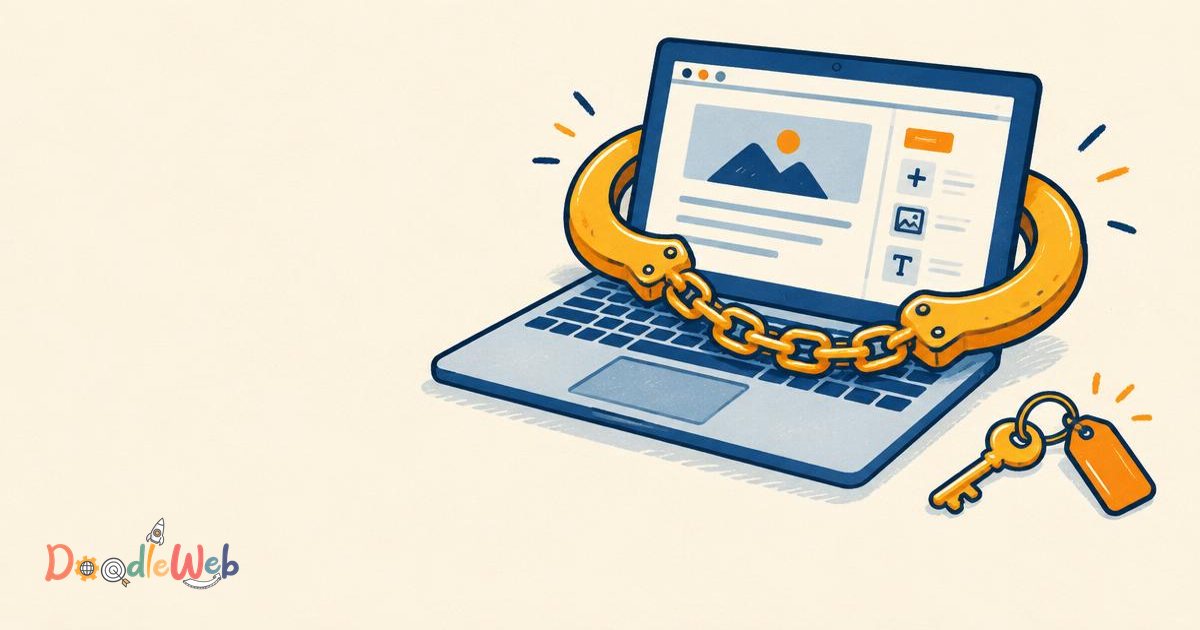
Two weeks later, the founders disappear. Your primary contact becomes a junior account manager six months out of college. The strategic wireframes get delegated to an intern, and basic feedback cycles take ten business days. Six months and $85,000 later, you are still waiting on staging links for a mid-market WordPress build that should have taken six weeks.
This is the standard pyramid agency model. It is designed to maximize billable agency hours, not to ship working software.
Here is why small, senior-only product and design teams consistently run laps around 30-person agencies.
Where does the time actually go in a large agency?
Large agencies do not move slowly because their designers lack talent. They move slowly because their organizational structure creates friction at every touchpoint.
In a traditional agency, a simple design revision travels through five layers:
- The client leaves a note in an asynchronous review tool or sends an email.
- An account coordinator logs the note into Jira or Asana.
- The account manager translates the request for an associate creative director.
- The associate creative director assigns the task to a mid-level or junior designer.
- The junior designer makes the edit and hands it back up the ladder for internal review.
If anyone along that chain misunderstands the brief, the cycle repeats. What should take twenty minutes of direct Figma work turns into an entire sprint cycle.
When you strip out the layers of middle management, the game changes. You speak directly to the person who writes the CSS and designs the interface. Feedback gets incorporated in real time, questions get resolved on the spot, and ideas move from discovery to production in hours rather than weeks.
Why does senior expertise eliminate downstream re-work?
Building a website is easy. Building a fast, secure, search-ready website that converts qualified buyers is hard.
Junior designers often design for approval rather than performance. They build beautiful desktop mockups in Figma with oversized uncompressed assets, complex nested divs, and illegible font contrast ratios. An account manager approves it because it looks modern, and the client signs off because they assume the agency vetted the technical feasibility.
The project then hits the development team. The developers realize the design breaks completely on mobile screens, destroys your Core Web Vitals, and requires custom JavaScript libraries that tank page load speeds. Now the project enters an expensive, demoralizing cycle of revisions.
Senior practitioners design with the browser in mind from the very first wireframe. They do not hand off impossible layouts because they have already spent a decade watching bad code break in production.
When you work with senior talent, technical architecture and design happen simultaneously:
- Accessibility and mobile ergonomics are baked into the layout from day one.
- Information architecture is structured around clean technical SEO instead of arbitrary aesthetic choices.
- Complex components are evaluated against Core Web Vitals before writing a single line of production code.
- Content models are planned for long-term editorial ease rather than static demo pages.
Preventing mistakes before they hit staging is the single most effective way to protect your launch date.
What happens when clients talk directly to builders?
Consider a real scenario we see across the Puget Sound region. A maritime logistics company in Ballard or a B2B SaaS team in Bellevue wants to rebuild their marketing site. Their sales cycle is intricate, their buyers are technical, and their value proposition requires nuance.
When you explain your buyer journey to an account manager, they take notes. Then they synthesize those notes into a creative brief. Then they present that brief to the production team.
Information theory calls this signal loss. The nuance of your business gets scrubbed away, replaced by agency buzzwords and generic SaaS templates.
When your team works directly with senior builders, nothing gets lost in translation. A senior designer can listen to your Head of Sales, understand the friction points in your demo funnel, and immediately sketch an interactive pricing calculator or comparison matrix that solves the problem.
Direct collaboration breeds momentum. Momentum creates clarity. Clarity gets sites launched.
How does team size impact your actual cost?
A common misconception is that 30-person agencies offer lower rates because they use junior labor. Their blended hourly rate might look reasonable on paper, but their billing structure tells a different story.
When you hire a pyramid agency, your invoice covers more than the designers and developers building your site. You are paying for:
- The account director who attends status calls to read slides aloud.
- The project manager who updates Gantt charts that constantly slip.
- The overhead for prime office leases in downtown high-rises.
- The hours spent on internal alignment meetings between departments.
A senior-only team might carry a higher direct rate, but they require a fraction of the hours to deliver superior work. There are no bloated internal syncs, no junior learning curves billed to your account, and no endless status decks. Every dollar you spend goes directly into product strategy, interface design, clean code, and search optimization.
What should you look for instead?
If you are evaluating design and development partners for an upcoming project, look closely at who will actually do the work.
Ask the agency point-blank: who is touching my Figma files, writing my code, and managing my deployment? If the answer involves a roster of coordinators and offshore production teams overseen by an occasional creative director, prepare for a long timeline.
If you want to ship quickly without sacrificing quality, look for small studios run exclusively by experienced practitioners. You get faster turnarounds, direct accountability, and a digital asset that drives real business pipeline from the day it goes live.
Ready to see how your current site measures up? Request a free breakdown of your site speed, architecture, and user experience through our free website audit report, or contact us to talk directly with our senior team.

Co-founder & CEO · Seattle, WA
Kamal Sudha, also known as Kam Ray, is DoodleWeb’s co-founder and CEO and a member of its editorial review team.

Reviewed by Mark Yuasa