
Most regional businesses treat the Puget Sound as a single homogenous market. They spin up one main service page, sprinkle the word "Seattle" across their title tags, and expect phone calls from both Ballard and Bellevue.
That shortcut rarely works. A homeowner in Madison Park with a 1920s Tudor has completely different renovation concerns than a tech executive buying new construction in Bellevue's West Bellevue neighborhood. Similarly, a boutique fitness studio in Capitol Hill is competing for foot traffic against radically different entities than one operating along Ballard Avenue.
Building neighborhood-specific landing pages is one of the most effective ways to capture high-intent organic traffic in the Seattle metro area. However, search engines penalize thin, programmatic spam. If you simply duplicate text and swap neighborhood names, your rankings will stall.
Here is how we design neighborhood landing pages that actually rank, convert, and reflect the realities of the local geography.
Why does neighborhood context matter for Puget Sound SEO?
Google's local algorithms have grown increasingly precise over the past three years. Proximity signals, hyper-local reviews, and entity relationships now dictate who ranks in the map pack and top organic spots.
When a customer searches for commercial electrical work in Capitol Hill, they often deal with older retail build-outs, historic brick facades, and dense urban access challenges. Contrast that with Bellevue, where projects typically center around high-rise tenant improvements, strict commercial property management guidelines, and corporate campus requirements.
Search engines look for topical depth that matches this intent. If your landing page addresses neighborhood-specific pain points, permits, and vernacular, your content stands out against generic citywide competitors.
Capitol Hill vs. Ballard vs. Bellevue: Structuring page content
To demonstrate how to execute this strategy, let us break down three distinct Puget Sound sub-markets.
/Capitol Hill: Density, character, and foot traffic
Capitol Hill demands content that understands older building stock, high pedestrian density, and historic preservation considerations.
- Tone and framing: Progressive, community-oriented, and mindful of historic quirks.
- Geographic anchors: Mention familiar corridors like Pike-Pine, Broadway, 15th Avenue East, or proximity to Cal Anderson Park.
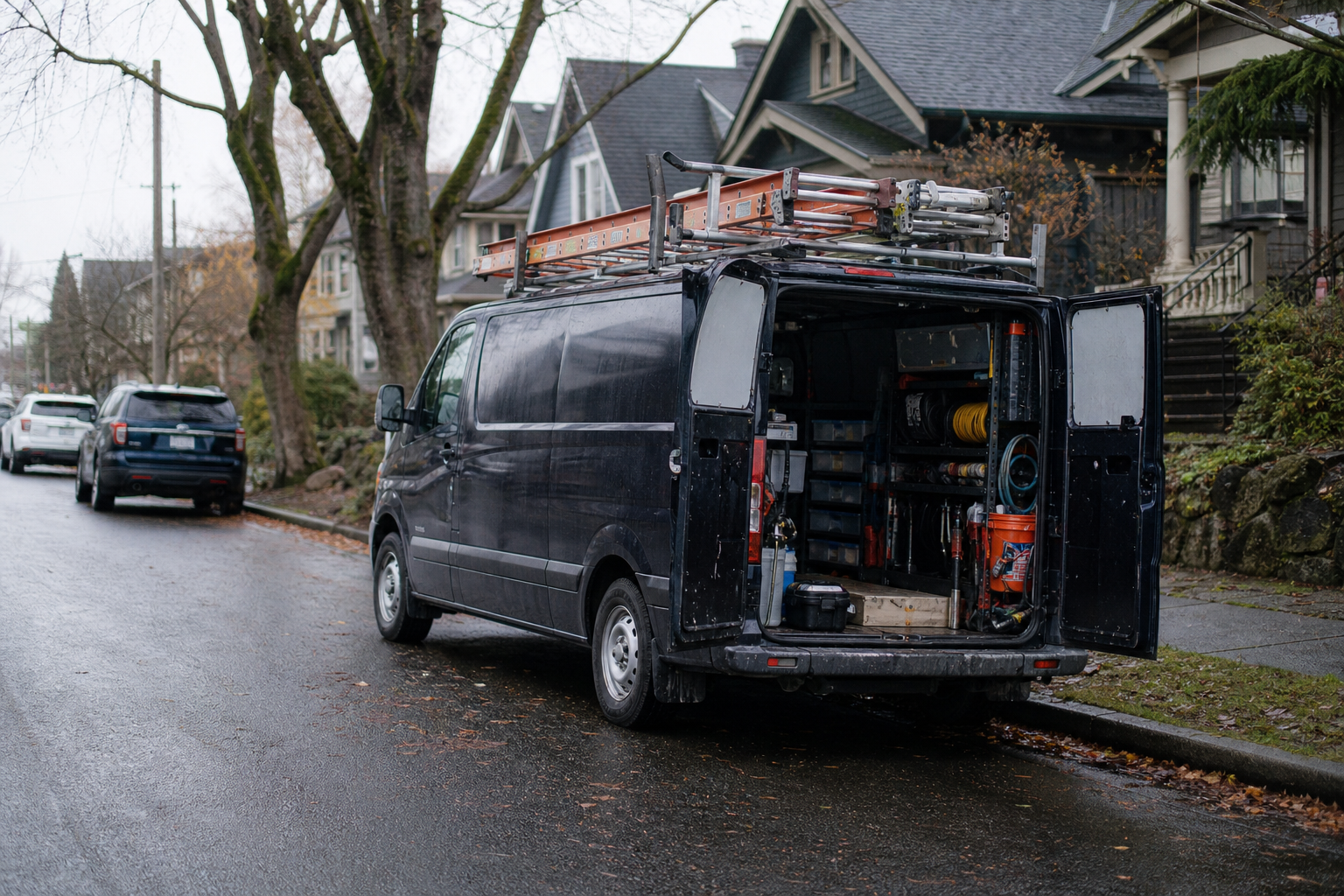
- Operational logistics: Address tight street parking, narrow alley access, or walk-up access. If you run a service business, explain how your vans handle street-parking permits in dense residential areas.
/Ballard: Industrial roots, modern retail, and tight neighborhoods
Ballard blends maritime industrial history with new dense mixed-use residential blocks. Buyers and residents here value local authenticity.
- Tone and framing: Practical, direct, and craftsmanship-focused.
- Geographic anchors: Reference Ballard Avenue, Market Street, the Nordic Museum district, or Shilshole.
- Operational logistics: Highlight how you handle mid-century plumbing, moisture issues caused by Puget Sound proximity, or zoning quirks common in north Seattle neighborhoods.
/Bellevue: Scale, tech hubs, and master-planned precision
Crossing Lake Washington changes search behavior significantly. Downtown Bellevue, Meydenbauer, and Enatai attract corporate clients, enterprise accounts, and affluent homeowners looking for modern efficiency.
- Tone and framing: Professional, polished, and process-driven.
- Geographic anchors: Reference Downtown Bellevue, Bel-Red corridor, Spring District, or Factoria.
- Operational logistics: Focus on structured timelines, HOA compliance, commercial building access, and modern building automation.
A neighborhood page should read like your team actually completed work on that specific street corner, not like an algorithm ran a mail merge on a spreadsheet.
What elements must every neighborhood landing page include?
To avoid Google's "doorway page" penalties, each landing page must feature genuine, unique value. Never launch ten neighborhood pages that share 90% of the same copy.
/1. Specific local project proofs
Include client case studies, photos, or brief testimonials from that exact neighborhood. If you are a commercial architect, show the exterior of a project completed near Pike Place or Old Bellevue. Add captions mentioning the street or project type.
/2. Tailored FAQ schema
Include structured FAQ data directly on the page. Address real customer questions regarding service delivery in that specific area. For example, explain your coverage for travel fees across the SR 520 bridge, or how your team navigates parking permits in the City of Seattle.
/3. Hyper-local geo-coordinates and maps
Embed a customized Google Map that highlights your service radius for that neighborhood, or display directions from nearby transit hubs such as the light rail stations at Capitol Hill or Bellevue Downtown.
/4. Distinct meta data
Do not use cookie-cutter formulas. Write metadata that speaks to specific neighborhood pain points:
- Good Capitol Hill title tag: Historic Home Electrical Rewiring | Capitol Hill Seattle
- Good Bellevue title tag: Commercial Office Network Installation | Downtown Bellevue
How many neighborhood pages should you build?
Do not publish twenty thin pages simultaneously. Start with three to five core neighborhoods where you already do business, have customer references, and can provide high-resolution photo evidence.
Analyze your search performance over 90 days. Track whether queries containing neighborhood identifiers show improved impressions and click-through rates. Once those pages earn authority and conversions, expand into secondary areas like Fremont, Queen Anne, Kirkland, or West Seattle.
If your website currently struggles to compete across multiple Puget Sound neighborhoods, we can help audit your search visibility and map out a sustainable local content strategy.
Reach out to our team via our contact page or request a free website audit report to see where your local search strategy currently stands.

Founder & Lead Strategist · Seattle, WA
Chandan Sharma co-founded DoodleWeb in Seattle and leads its AI search visibility work, including the SiteSonar platform.

Reviewed by Kamal Sudha