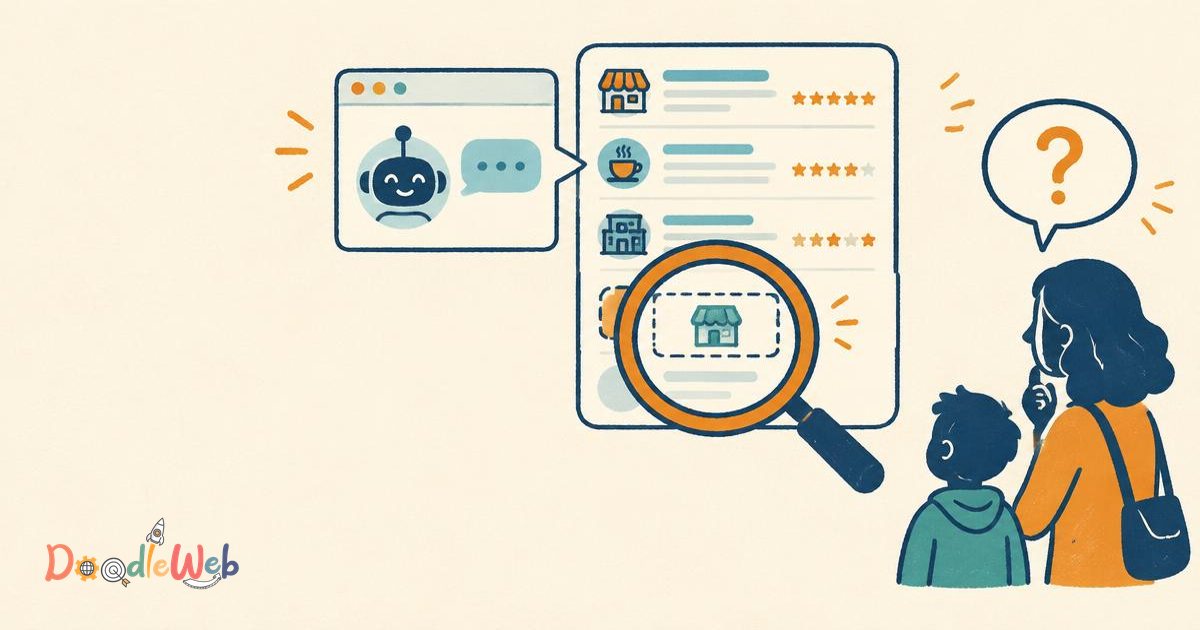
A nonprofit leader asked whether AI tools recommend them to people who do not know them yet. Here is the five minute test and what to publish if you are missing.
Read the transcript
Two weeks ago, a nonprofit client asked me a question every business should ask. We were showing them where they appear in ChatGPT and other AI tools. One of their leaders stopped us and said, are you talking about people who search for us by name? I care more about the people who don't know us yet. She meant parents asking about kids' summer camps nearby, or how to teach children about money. On those questions, they showed up in one AI tool and barely appeared in the others. Big national brands were named instead. Try this for your own business. Open ChatGPT and ask the question a new customer would ask before they know you exist. If you are missing from the answer, publish pages that answer that exact question, with clear facts, FAQs and a recent date. Cover the broad question first, and the narrower ones tend to follow.
Recently a nonprofit client asked us a question every business should ask. We were showing them where they appear in ChatGPT and other AI tools. One of their leaders stopped us and said: are you talking about people who search for us by name? I care more about the people who don't know us yet.
She was right to ask. Showing up when someone types your name is the easy part. The people who matter most for growth have never heard of you.
What is the difference between being found by name and by category?
Being found by name means an AI tool describes you when someone asks about you directly. Being found by category means an AI tool recommends you when someone asks about what you do, without naming you. Name visibility protects your reputation. Category visibility brings in new customers, donors, students and families.
| Found by name | Found by category | |
|---|---|---|
| Example prompt | "What programs does [your organization] run?" | "Kids' summer camps near me" |
| Who asks it | People who already know you | People who have never heard of you |
| What it tells you | Whether AI describes you accurately | Whether AI recommends you at all |
| What our nonprofit client saw | Present and described | Named by one AI tool, barely in the others |
| Who wins when you are missing | Nobody, the answer is about you | Usually bigger, better documented brands |
| What fixes it | Accurate facts on your site and profiles | Pages that answer the exact broad question |
What we saw for one nonprofit
The questions she cared about were the ones parents ask: summer camps for kids nearby, and how to teach children about money. On those questions, the organization showed up in one AI tool and barely appeared in the others. Big national brands were named instead.
That gap is easy to miss. A report that mostly tests your own name will look healthy while the questions that bring in new people go to someone else.
Try this five minute test on your own business
- Write three questions a new customer asks before they know you. No brand names. Think about the problem they have, not the service you sell.
- Ask ChatGPT each one. Then repeat in Gemini, Perplexity, Claude and Google's AI Overviews if you can.
- Note who gets named, and which websites are cited as sources. The sources tell you what the AI is reading.
- Ask each question twice. AI answers vary from run to run, so one result is not a verdict.
- Save the answers with the date. Repeat next month to see what changed.
If you want this done across more questions and every major AI tool, our AI visibility report runs it for you.
If you are missing, publish pages that answer that exact question
AI tools build answers from pages that answer the question clearly. If no page on your site answers "summer camps for kids in [your city]", there is little for the AI to quote. Publish one that does:
- Answer in the first two sentences. Say plainly who you serve, where and what it costs or how to join.
- Use clear facts. Location, ages or audience served, dates, prices or cost ranges, eligibility and who runs it.
- Add FAQs in the words people use. Write the questions the way a parent or buyer would type them.
- Show a recent date and keep it current. Update the page when facts change and show the date.
- Add structured data. FAQPage and Organization markup help AI tools read the facts correctly.
| Weak page | Answer page |
|---|---|
| "Our programs inspire young minds" | "Day camps for ages 6 to 12 in North Seattle, June to August" |
| Facts hidden in a PDF brochure | Dates, ages and costs written on the page |
| No questions answered | An FAQ with the questions parents actually ask |
| No visible date | "Updated" date that matches the facts |
Our guide to optimizing content for AI search goes deeper on page structure.
Cover the broad question first, then go narrower
Start with the broad question, then build out. In our experience, once a page is named for the broad question, narrower versions tend to follow, because the same facts support them.
| Broad question | Narrower | Narrowest |
|---|---|---|
| Kids' summer camps near me | STEM summer camps for kids in Seattle | Week long coding camp for 10 year olds in North Seattle |
| How do I teach children about money? | Money lessons for elementary school kids | Free financial literacy workshop for families in Seattle |
Each cell can be a section on one strong page rather than a separate thin page. Write the broad page first, link the narrower sections from it, and keep the facts identical across your site and profiles.
How DoodleWeb helps
On our own site we track more than 100 prompts across ChatGPT, Gemini, Perplexity, Claude and Google AI Overviews, split between name questions and category questions. We do the same for clients: find the category questions you are missing, write the answer pages, and check the results again each month.
Nonprofits can see how this works in nonprofit AI search visibility. For any organization, start with answer engine optimization or run the free AEO readiness checker.
Frequently asked questions
What does found by category mean in AI search? It means an AI tool names your organization when someone asks a general question about what you do, such as "kids' summer camps near me", without typing your name. It is how new customers discover you.
What is the difference between branded and unbranded AI search? A branded prompt includes your name, so it tests whether AI describes you accurately. An unbranded prompt describes a need without naming anyone, so it tests whether AI recommends you to people who do not know you yet.
How do I check if ChatGPT recommends my business? Write three questions a new customer would ask before they know you exist, ask each one in ChatGPT twice, and note who gets named and which sources are cited. Repeat in Gemini, Perplexity, Claude and Google AI Overviews, and save the answers with the date.
Why do big national brands show up instead of me? They usually have more pages that answer the broad question directly, with clear facts that many other sites repeat. A smaller organization can compete by publishing a page that answers the exact question better, with local facts, FAQs and a recent date.
What should a page include to show up in AI answers? A direct answer in the first two sentences, clear facts such as location, audience, dates and costs, FAQs written the way people ask, a visible recent date and structured data such as FAQPage and Organization markup.
Should I write the broad question or the narrow one first? Write the broad question first. Once a page is named for it, the narrower versions tend to follow because the same facts support them.
Where to go next
Watch the short video at the top of this article, then try the five minute test on your own business. If you are missing from the answers, book a 30 minute call and we will look at the questions with you.

Founder & Lead Strategist · Seattle, WA
Chandan Sharma co-founded DoodleWeb in Seattle and leads its AI search visibility work, including the SiteSonar platform.
Reviewed by Chandan Sharma