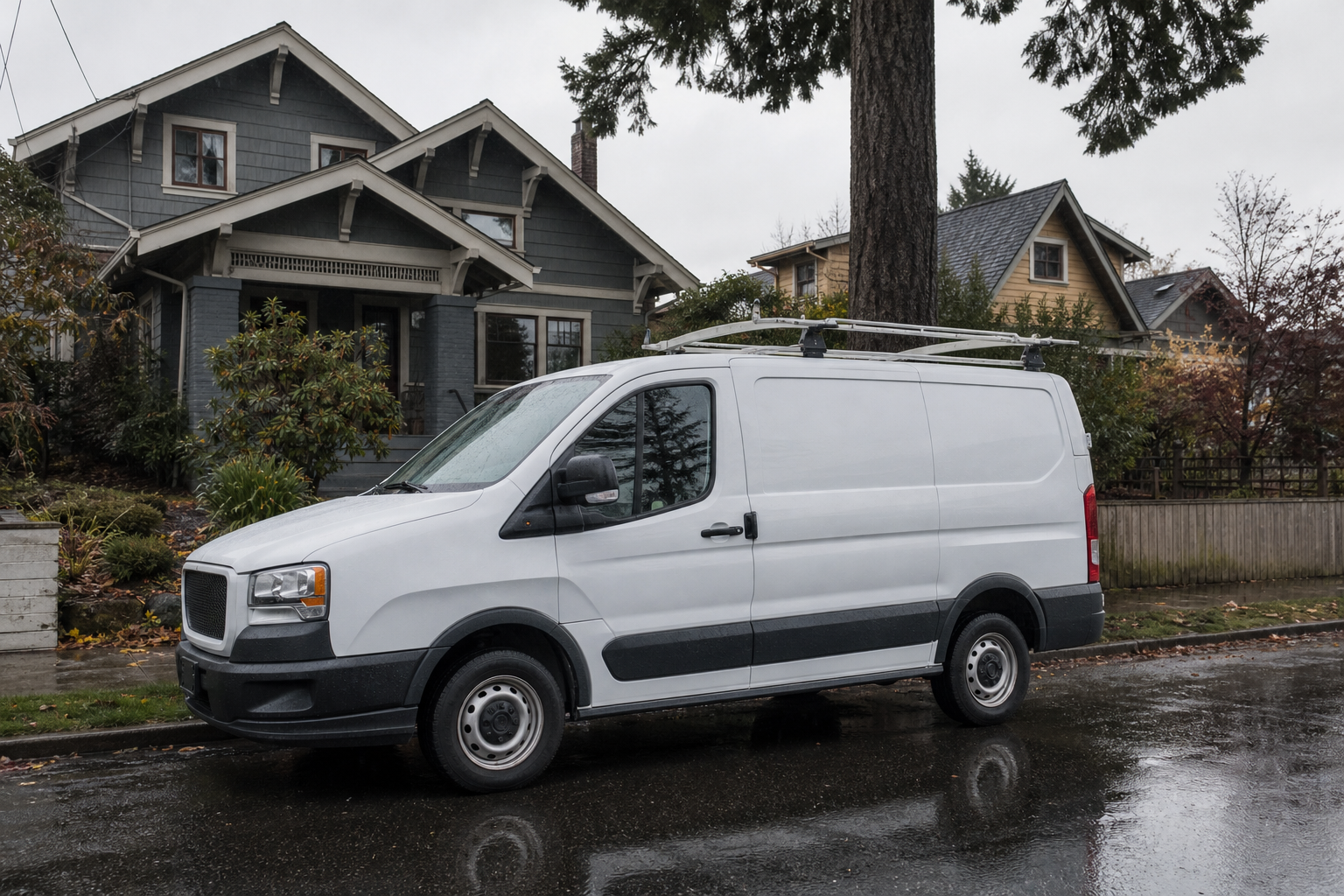
If you run a plumbing shop in Ballard or an HVAC outfit serving the Eastside, you already know the Map Pack drives your highest-intent calls. What many home services contractors miss is why competitors jump above them with fewer total reviews.
The differentiator is almost always review velocity.
Google does not just count your stars. Its local ranking algorithm evaluates the cadence, consistency, and freshness of incoming reviews. A business that gathers thirty reviews in a wild burst every July and then stays silent until spring looks erratic. A business that collects three authentic reviews every week signals continuous, dependable local activity.
Here is the exact framework we use at DoodleWeb to build sustainable review velocity for service contractors across the Puget Sound.
Why Does Review Cadence Beat Total Volume?
Google wants to show searchers who is doing good work right now. If a homeowner in West Seattle needs a water heater replaced on a cold November evening, recent proof matters far more than a review left three years ago.
Search algorithms look at three primary review signals:
- Velocity: The rate of incoming customer feedback over rolling 30, 60, and 90-day windows.
- Sentiment and semantic depth: The specific words customers use, including neighborhoods like Phinney Ridge or services like heat pump installation.
- Owner engagement: How reliably and quickly you acknowledge feedback.
When your intake matches the rhythm of completed jobs, your Google Business Profile stays fresh. That regular heartbeat tells local search crawlers that your dispatchers are active and your crews are in the field.
Where Most Home Services Pipelines Break
Most trade businesses do not have a customer satisfaction problem. They have a friction problem.
Technicians finish a tough crawlspace job in Bellevue, wipe their boots, pack the van, and say, "Be sure to leave us a review." By the time the homeowner walks back inside to manage dinner and wrangle kids, that conversation is forgotten.
Relying on technicians to manually ask for reviews creates wild spikes and long dry spells. Your review velocity plummets whenever your busiest season hits, which is precisely when your operational signal needs to be strongest.
The secret to steady review flow is removing your field crews from the collection logistics entirely. Train them to prime the customer, then let automated software handle the delivery.
How to Build a Frictionless Collection System
To maintain reliable momentum across King, Pierce, and Snohomish counties, you need a repeatable process tied to your job dispatch software. Whether you use ServiceTitan, Housecall Pro, or Jobber, the mechanics look similar.
/Step 1: Prime the Customer On-Site
Your field tech should never hand over a phone or beg for a review. Instead, they plant a simple verbal seed right before leaving the property:
"Our office manager Sarah sends out a quick text message after we close out the job to make sure the work meets our standards. If we earned five stars today, sharing that in the link helps our family-owned business tremendously."
This sets clear expectations without putting the homeowner on the spot.
/Step 2: Trigger an Automated SMS Within 60 Minutes
Email open rates for blue-collar services hover around twenty percent. Text message open rates exceed ninety percent.
Configure your dispatch software to send a direct review link via SMS thirty to forty-five minutes after the technician marks the job completed. At that moment, the heat is running, the drain clears cleanly, and relief is at its peak.
The message must be direct:
"Hi Dave, thanks for trusting Puget Sound Heating today. Could you take thirty seconds to share your experience with Kevin? [Direct Google Review Link]"
Never route that link to a third-party landing page or an internal feedback gate. Send them straight to your Google Business Profile review modal.
/Step 3: Implement a Second-Touch Email Follow-Up
If the text link goes unopened after forty-eight hours, send a single clean email invoice with a secondary review button. Keep the copy short and professional.
Do not run five-step automated drip sequences. Repeatedly badgering customers leads to annoyed three-star reviews instead of glowing feedback.
How Do You Encourage Keyword-Rich Customer Responses?
You cannot legally tell customers what to write, and you should never script their words. However, the questions you ask in your follow-ups naturally prompt high-value semantic details.
Instead of asking, "How did we do?", ask:
- "Which neighborhood did our team visit today?"
- "What issue did our technician solve for your home?"
When a customer types their response, they will naturally write sentences like: "Tyler fixed our gas furnace in Queen Anne during the freeze." Those natural terms reinforce your geographic and service relevance to Google without keyword stuffing.
How Should You Respond to Reviews?
Every incoming review requires a response within forty-eight hours, including the positive ones.
Avoid copy-pasting the exact same phrase on every review. Mention the specific service area and problem in your reply:
"Thanks for the kind words, Mark. We were happy to get your heat pump back up and running in Kirkland before the weekend cold snap. Let us know if you need anything else."
This confirms your active presence to Google algorithms and shows prospective customers reading your reviews that you pay attention to the details.
Steady Momentum Wins the Local Pack
Consistency always trumps sporadic effort in local search. Ten reviews spread evenly across a month will do far more for your Map Pack rankings than fifty reviews collected in a weekend after a panic email to your past client database.
Set up an automated system, prime your homeowners on-site, and respond promptly to every client who takes the time to post.
If your local rankings have plateaued or your site is failing to convert organic search traffic into booked service calls, reach out to our team at DoodleWeb for a free-website-audit-report. We will identify the exact gaps holding your search visibility back.

Founder & Lead Strategist · Seattle, WA
Chandan Sharma co-founded DoodleWeb in Seattle and leads its AI search visibility work, including the SiteSonar platform.

Reviewed by Mark Yuasa