A college adding programs, campuses, or online cohorts grows out of its website before it grows out of anything else. The site was built for one audience and now serves four. This is the list of questions we hand to growing institutions before they spend anything, in the order that saves the most money.
What should a growing college ask first?
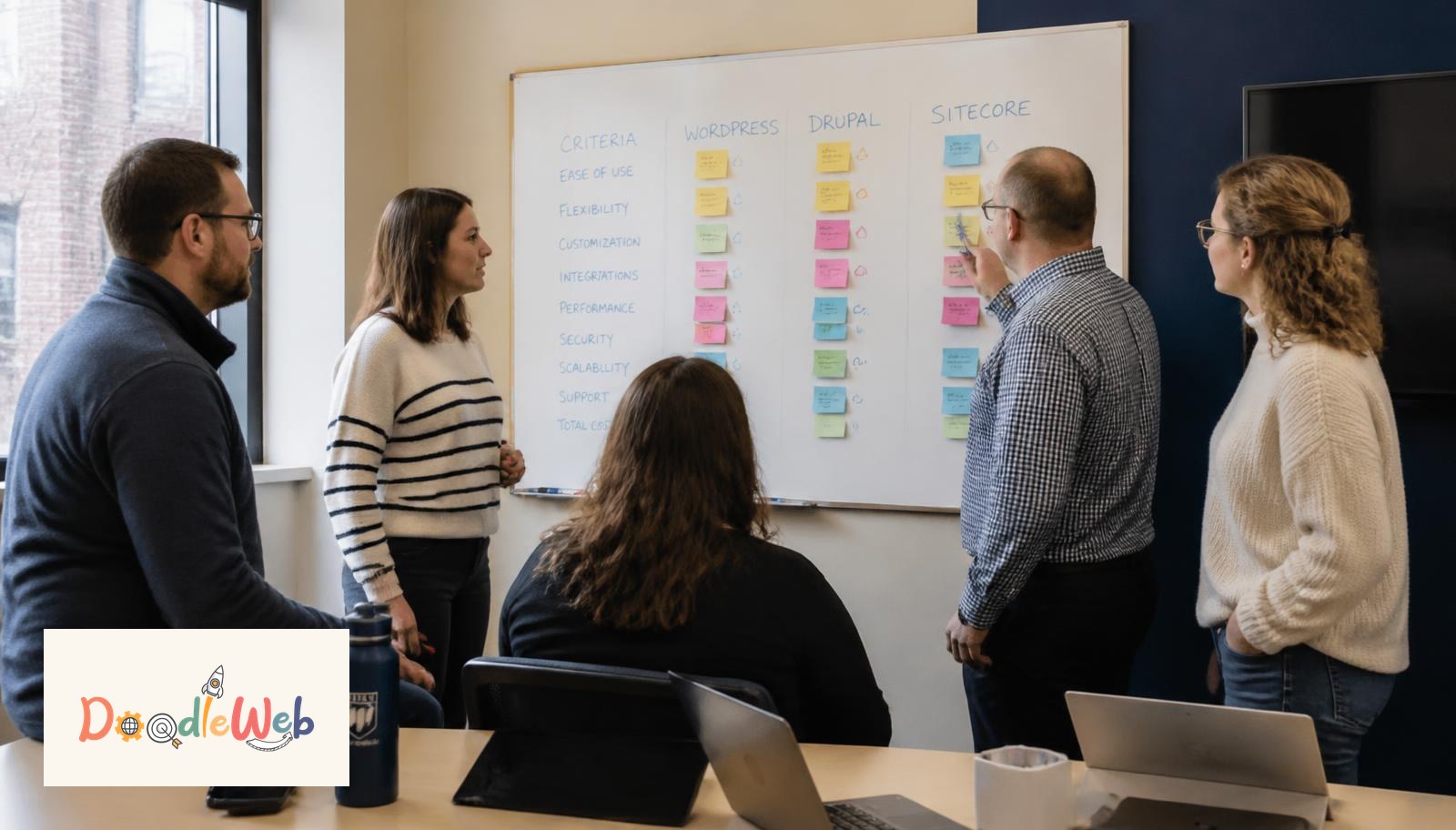
Not "which platform," but "what will this site have to carry in three years?" Program count, editor count, languages, campuses, and application volume. Every later decision follows from those five numbers, and almost every failed higher-ed rebuild we are asked to rescue was scoped against today's numbers instead of the three-year ones.
How many editors will actually publish?
The honest count is usually three to five times the number named in the kickoff meeting. Once departments discover they can publish, they publish. If the answer is more than about 20 people, you need role-based permissions, a locked component library, and a review queue, which rules out several otherwise appealing options.
Do we need one site or several?
Three patterns work:
- One site, sectioned. Cheapest to run, hardest to govern politically.
- Multisite platform. Shared design system, separate editorial control per college. The common answer for growing institutions.
- Separate sites. Only defensible when a unit has genuinely different branding and its own web staff.
Choosing multisite before growth is much cheaper than untangling four independent sites afterwards.
What do we do about the programs we are about to launch?
Build the program page template as a content type with structured fields, so launching program 41 costs an hour rather than a design cycle. Include EducationalOccupationalProgram schema in the template itself. A growing college that hand-builds program pages will have 40 inconsistent ones within two years.
How will prospective students actually find us?
Increasingly through AI assistants rather than a search results page. That changes the build: answer-first program copy, facts in structured data, visible last-updated dates, and content that states cost and outcomes plainly. How students use AI in the college search covers the behaviour, and the AEO guide for higher education covers the implementation.
What should we ask a vendor about accessibility?
Ask three questions: what conformance level do you commit to, how do you prevent editors from publishing inaccessible content after launch, and what is your remediation SLA when an issue is reported. A vendor who answers with the word "compliant" and nothing else has not done this work. Our accessibility services page shows what the answers should look like.
What is the smallest useful first step?
A two-week diagnostic: baseline Core Web Vitals on mobile, audit the top 50 pages for accessibility and answer-first structure, map the real content model, and produce a phased plan with costs. It is cheap, it is reusable in an RFP, and it usually changes the shape of the project before anyone commits budget.
Where to go next
Read nine website development factors for growing colleges, seven website platform decisions for growing colleges, and the complete guide to college website platforms. Or book a working session.
Seattle agency · Seattle, WA
A full-service digital agency working in WordPress, Drupal, Shopify, Webflow, React, and React Native. We partner with universities, nonprofits, governments, and growing brands to ship sites that hold up after launch.