
Colleges that grow enrollment in 2026 do it with a website built for two very different audiences at once: a 17-year-old who compares your program against four others in a single AI-generated answer, and an accreditor or grant officer who reads every page like a legal document. Most .edu sites still lean toward the second audience and lose the first. These are the nine web development factors that separate colleges gaining share from the ones quietly shrinking.
1. Program pages that answer the question in the first sentence
The old .edu pattern buries the answer under a leadership quote and a 400-word history. AI Overviews, ChatGPT, and Perplexity extract the first direct answer they can find. If your BSN page opens with "Our nursing program was founded in 1962," you have handed the citation to a competitor whose page opens with "The BSN is a four-year, 128-credit program with clinical placements starting in year two." Rewrite the top of every program page as a plain-language answer to the question the prospective student typed.
2. Site speed that survives a rural 4G connection
A full third of prospective students first open your site on a phone with an inconsistent connection. Google's Core Web Vitals thresholds (LCP under 2.5s, INP under 200ms, CLS under 0.1) are the floor, not the target. On a real device on a real network in a real county, most .edu homepages fail all three. Compress hero images, defer video autoplay, lazy-load carousels, and audit third-party tags monthly.
3. Structured data on every program, faculty, and event page
Course, EducationalOccupationalProgram, Person, and Event schema are how AI systems confirm what your pages claim. A program without JSON-LD is invisible to the engines that increasingly decide which schools get named in an answer.
4. A search-first navigation for a search-first generation
Students do not browse. They search. Your site search needs to work well: typo-tolerant, program-aware, ranked by relevance not publish date, and instrumented so admissions can see the top 100 queries every month and turn them into content.
5. Consistent brand and program facts across every surface
Program name, credit count, tuition, start dates, and accreditor status must match exactly on your website, in Common App, on College Scorecard, in your GBP entries, and on any third-party guide. Conflicting facts make AI systems less confident citing your school.
6. Accessibility that meets WCAG 2.2 AA and Title II
Federal Title II regulations require most public colleges and universities to be WCAG 2.2 AA conformant by April 2026 or April 2027 depending on size. Accessibility is no longer a legal risk to plan for. It is a legal requirement that is either met or missed on every page you publish.
7. A CMS your team can actually publish in
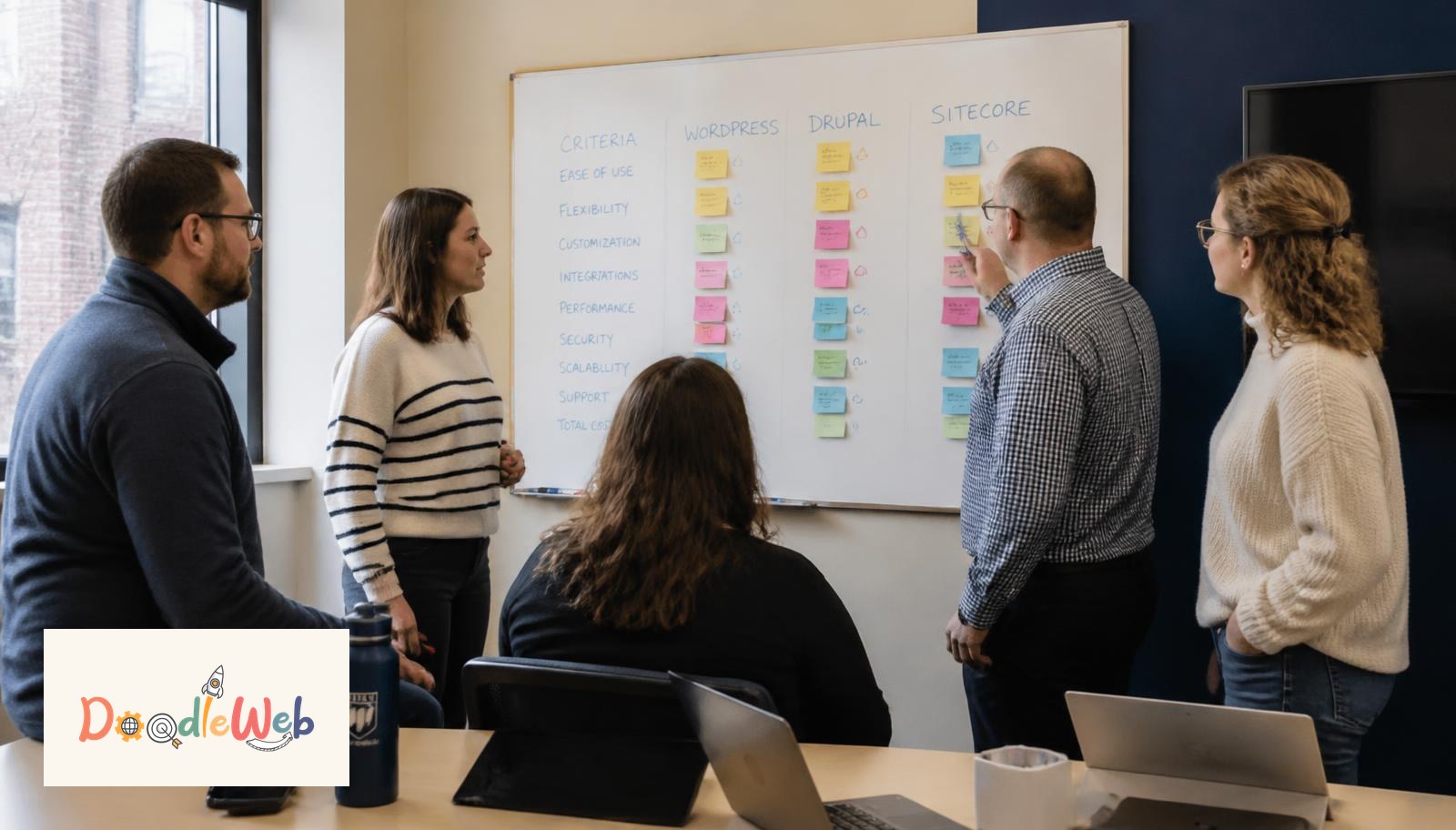
If you have three approvers per program page and a two-week publish queue, your competitors are publishing three times as much content per month. The right CMS matches the people who publish, not the vendor who sells it. WordPress, Drupal, and Webflow all work when the workflow is designed for the actual editors.
8. Application funnels instrumented end to end
Most colleges know their application total and nothing else. Every step of the funnel from "requested info" to "submitted app" to "confirmed enrollment" should be tracked, ideally in a warehouse the enrollment team can query without asking IT. This is where the honest wins live.
9. A publishing engine tuned for AI citations
Answer engine optimization is now table stakes. Publish one deeply useful, question-shaped guide per program per quarter. Build FAQ blocks on every program page. Cite your own data. Get named in third-party rankings. This is what earns citations in the answers your prospects now trust more than your homepage.
Where to go next
If you are only going to do three of these this year, do 1, 2, and 3: rewrite the top of every program page, fix Core Web Vitals, and add structured data. It is the shortest path from invisible to cited.
We work with growing colleges on exactly this. Read the companion pieces on choosing a college website platform, features colleges need, and fixing slow university sites, or book a free audit.
Seattle agency · Seattle, WA
A full-service digital agency working in WordPress, Drupal, Shopify, Webflow, React, and React Native. We partner with universities, nonprofits, governments, and growing brands to ship sites that hold up after launch.