
''' For a B2B company, your website is not a brochure. It is a sales engine, a recruiting tool, and a knowledge base. The content management system (CMS) running it determines what you can do and how much it costs to do it.
Our clients in the Seattle area, from Bellevue tech firms to Tacoma logistics companies, ask us this all the time: "Which CMS should we use?" The answer for a B2B organization in 2026 comes down to a trade-off between power, usability, and long-term cost.
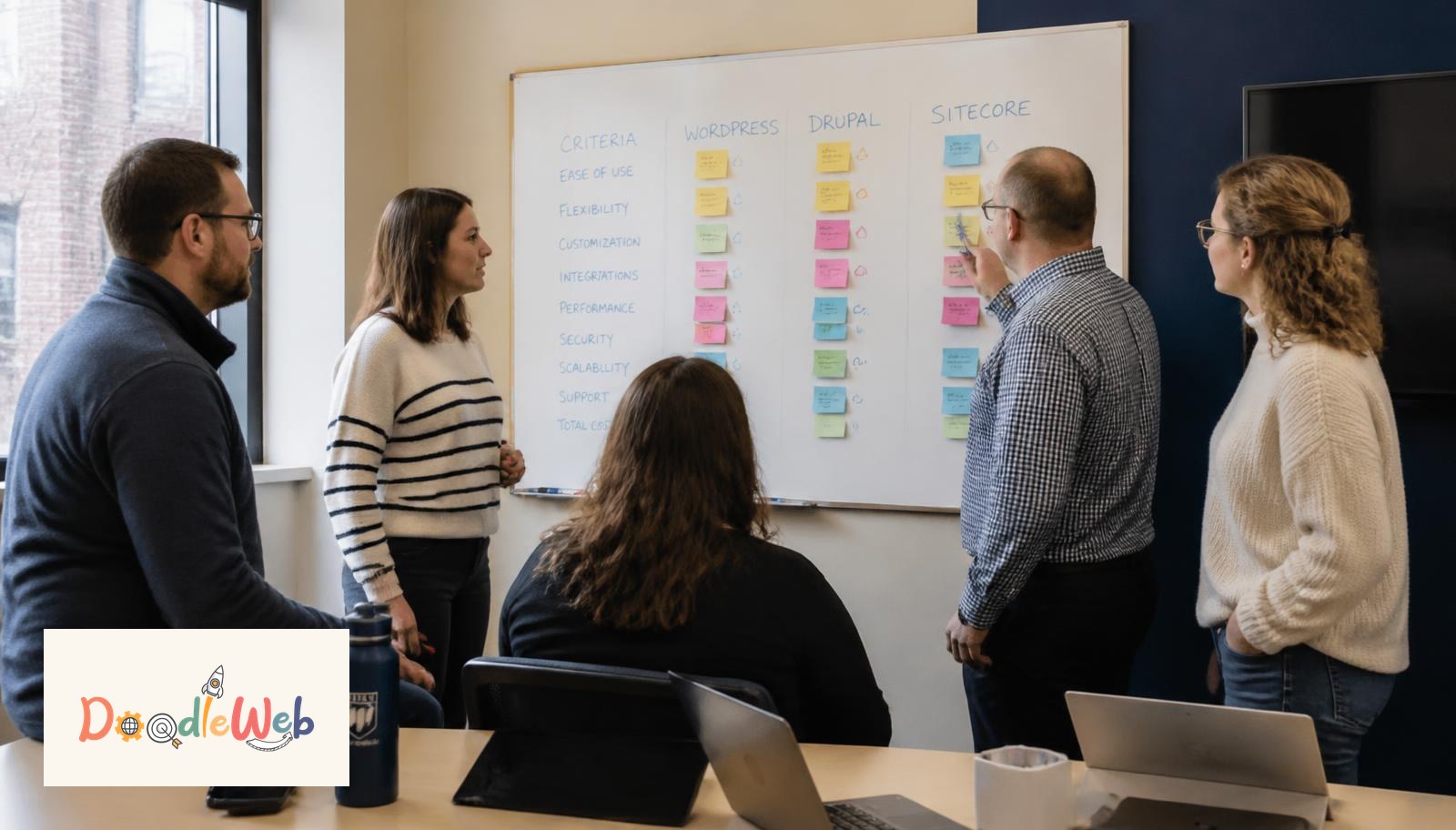
We build websites on WordPress, Drupal, and Webflow. Here is our direct comparison for B2B use cases.
Is WordPress Good for B2B Websites?
WordPress is the most popular CMS in the world for a reason. Its editing experience is intuitive, and its massive plugin ecosystem means you can add functionality quickly. For most B2B marketing teams, it hits the sweet spot.
A typical WordPress build for a mid-market company, like a Puget Sound accounting firm, involves a custom theme and a curated set of plugins. We avoid off-the-shelf themes because they are bloated and insecure. A custom build gives you a fast, secure foundation focused on your business goals.
- Pros: Easy to use for non-technical marketers, huge library of plugins, large developer pool, lower initial development cost.
- Cons: Requires diligent maintenance (updates, security scans), can be slower if overloaded with poor-quality plugins, security is a constant concern.
For B2B, the key is professional setup and hosting. We see too many companies running mission-critical sites on cheap, shared hosting. For a lead-generating B2B site, managed WordPress hosting from a provider like WP Engine is non-negotiable. This provides the security, speed, and support you need.
Is Drupal a Better Choice for Security?
Yes, generally. Drupal’s architecture is more robust and secure out of the box. It is our go-to for clients with complex security requirements or data models. Think healthcare, government, or fintech.
We built a multi-site platform for a large regional healthcare provider on Drupal. It allowed them to manage dozens of clinic sites from a single codebase, with strict access controls for different user roles. This kind of granular control is where Drupal shines.
Drupal’s power comes with a steeper learning curve and higher development costs. Custom Drupal development is a specialized skill. Finding experienced Drupal developers in the Seattle area is harder and more expensive than finding WordPress developers.
- Pros: Enterprise-grade security, powerful user roles and permissions, excellent for managing large amounts of structured content, stable and reliable.
- Cons: More expensive to build and maintain, smaller developer community, less intuitive for content editors.
For a B2B company without a dedicated IT department, Drupal can be overkill. But for those who need to integrate with multiple systems or have stringent compliance needs, it’s often the best long-term choice.
What About Webflow?
Webflow is a newer player, but it’s a strong contender for B2B marketing sites. It combines a powerful visual design tool with a hosted, managed CMS. This means you don’t have to worry about servers, security updates, or maintenance.
We recommend Webflow to B2B clients who want a visually stunning site and whose marketing teams want to own the design process without writing code. A Ballard-based startup we work with uses Webflow to rapidly build and test new landing pages. The marketing team can do it themselves, which is a huge advantage.
- Pros: All-in-one hosting and CMS, excellent visual design control, very secure, fast performance, no maintenance required.
- Cons: Locked into Webflow’s hosting, less extensible than WordPress or Drupal, subscription costs can be higher than traditional hosting over time.
Webflow is not the right fit for complex web applications or sites that need deep integration with other systems. But for a marketing-focused B2B website, it provides unmatched design freedom and peace of mind.
How Do We Choose?
Our recommendation depends on your specific needs:
- Choose WordPress if you need a flexible, all-around CMS for content marketing and lead generation, and you have the resources for professional hosting and maintenance.
- Choose Drupal if you have complex security, integration, or content architecture requirements and a budget for specialized development.
- Choose Webflow if your priority is design flexibility and you want a hands-off, all-in-one solution for a marketing-focused site.
Choosing a CMS is a long-term decision. The right platform will support your business goals for the next five years, not just the next five months. It pays to get expert advice before you commit.
Considering a new B2B website? Let's talk. We can help you analyze the total cost of ownership and make the right choice for your business.
Start the conversation on our /contact page. '''
Seattle, WA
A full-service digital agency working in WordPress, Drupal, Shopify, Webflow, React, and React Native. We partner with universities, governments, and growing brands to ship sites and products that hold up after launch.