
You are seeing it more and more. You search on Google, and instead of a list of blue links, you get a direct answer generated by AI. And right below that answer, you see the sources. Small logos and links to the websites the AI used for its information.
Those are AI search citations. For us, they represent the most important new growth channel for our clients since the invention of the hyperlink. They are the new word-of-mouth referral, delivered by a machine.
What Are AI Search Citations?
When a potential customer asks a question, Google’s AI Overviews (or a chatbot like ChatGPT) synthesizes an answer. To prove its claims, it cites its sources. Being one of those sources means you have directly answered a potential customer's question at their exact moment of need.
Imagine a potential client in Bellevue searching for, “What kind of branding works best for tech startups?”
Google’s AI might generate a paragraph about the importance of authenticity and a strong mission. If your agency’s blog post on that exact topic is a source, you get the click. That click is from a highly qualified, local lead.
Why Do AI Citations Matter for Your Seattle Business?
Traditional search is becoming a feed of AI-generated answers. Visibility is moving from a list of ten links to a single, authoritative answer block. If you are not a source for that block, you are invisible.
Clicks from AI citations are high-intent. The user has a specific problem, has received a direct answer, and is now clicking to engage with an expert who provided that answer. They are not browsing. They are looking to act.
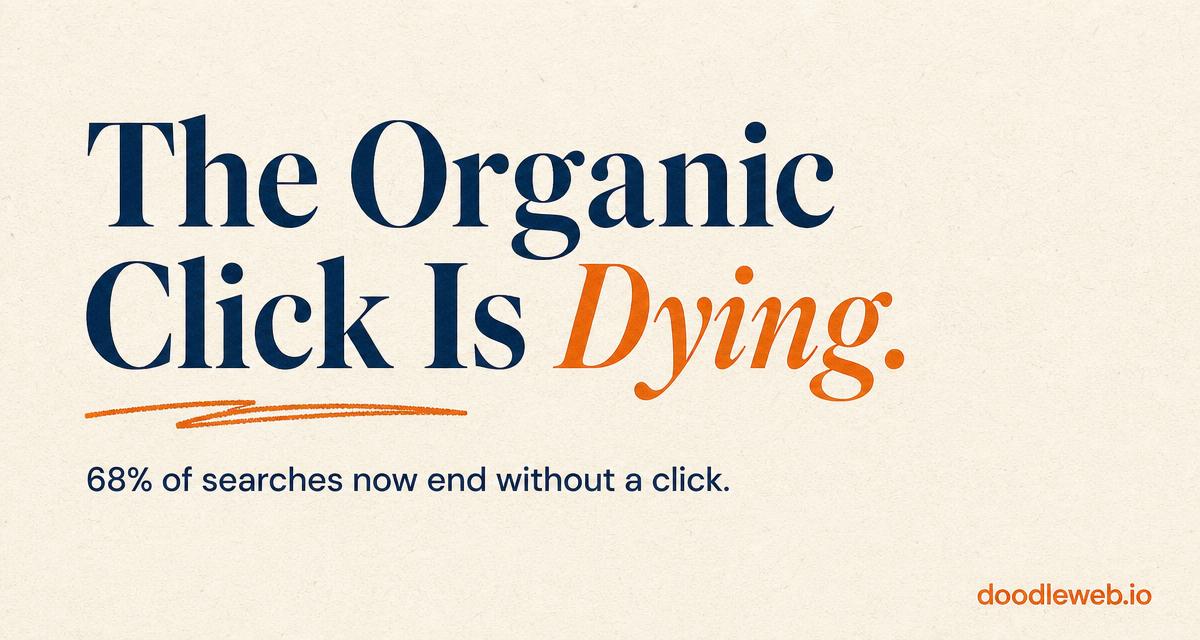
This is a defense against zero-click searches. If the answer is on the results page, the user has no reason to click. But a citation is a reason. It is an invitation to go deeper with a trusted resource.
How Do You Get Featured in AI Answers?
There is no magic button. Getting cited by AI is a result of having a genuinely useful and authoritative website. The same principles of good SEO apply, but with a sharper focus.
Answer Specific Questions. Stop writing vague blog posts. Create content that directly answers one question at a time. Use the exact question as your headline. Use clear, simple language. Think about the questions your sales team gets on calls. A Tacoma-based logistics company should be answering, "How much does drayage from the Port of Tacoma cost?"
Build Topic Authority. One article is not enough. You need to demonstrate deep expertise on a subject. If you are a financial advisor in Seattle, you need articles covering Washington State estate tax, investing in the local tech scene, and retirement planning for Boeing employees. This creates a web of knowledge the AI can trust.
Structure Your Content. Use clear H2s and H3s, bullet points, and numbered lists. This makes your content easy for both humans and AI to scan and understand. We implement structured data, like FAQ and How-To schemas, to explicitly spoon-feed answers to search engines.
"We treat AI as our most demanding client. It wants the right answer, it wants it quickly, and it doesn't have time for fluff. By building websites that please the AI, we are, by extension, creating a better, more direct experience for the human user."
Prove Your Expertise. Google’s AI is trained to recognize Expertise, Authoritativeness, and Trustworthiness (E-A-T). For a local business, this means having a detailed About page, author bios, case studies with real client names (with permission, of course), and positive reviews on platforms Google trusts.
Is This Just Another SEO Fad?
No. This is the next iteration of search. Google has staked its future on AI-integrated search results. Optimizing for AI answers is not a short-term tactic. It is a long-term strategy for aligning your digital presence with the direction the entire web is moving.
The work you do today to answer your customers' questions clearly will pay dividends for years. It establishes your website as a trusted resource, making you the obvious choice for both AI and human users.
Ready to make AI search a new growth channel for your business? Request our free website audit report to see where you stand.
Seattle, WA
A full-service digital agency working in WordPress, Drupal, Shopify, Webflow, React, and React Native. We partner with universities, governments, and growing brands to ship sites and products that hold up after launch.