Trinity Western University
DoodleWeb built Trinity Western University on Drupal for the Education sector. 287 unique WCAG 2.2 AA failures closed. Lighthouse accessibility score across the top 32 templates rose from 71 to 97 average. Zero critical or serious axe violations remaining. All 60+ program videos captioned and transcribed. VPAT 2.5 delivered for WCAG 2.2 AA. Public accessibility statement live. The cinematic recruitment experience now works for keyboard, screen reader, and reduced-motion users without any visual compromise.
WCAG 2.2 AA accessibility audit and remediation on a cinematic Drupal recruitment site. 287 issues closed, Lighthouse a11y 71 to 97, VPAT delivered.
Short answer
What did DoodleWeb deliver for Trinity Western University?
Trinity Western University hired DoodleWeb for a WCAG 2.2 AA accessibility audit and remediation across their Drupal recruitment platform. A video-heavy, animation-rich site had accumulated barriers: autoplaying hero video without controls, insufficient contrast on brand overlays, missing captions on 60+ program videos, keyboard-inaccessible mega menu, and quicklinks without discernible labels. Over 18 weeks DoodleWeb ran a full manual and automated audit (axe-core, Pa11y, NVDA, JAWS, VoiceOver, keyboard-only), closed 287 unique WCAG 2.2 AA failures, added prefers-reduced-motion support across every animation, captioned 60+ program videos, delivered a VPAT 2.5 and a public accessibility statement, and lifted the Lighthouse accessibility score from 71 to 97. The site now competes visually with top global universities without excluding prospective students who rely on assistive technology.
- Client
- Trinity Western University
- Industry
- Education
- Platform
- Drupal
- WCAG issues closed
- 287
- Lighthouse a11y score
- 71 → 97
- Videos captioned
- 60+
Last updated: August 2026 · Source: DoodleWeb, Columbia Tower, 701 5th Ave 42nd Floor, Seattle WA 98104 · info@doodleweb.io · (425) 359-0168
Where they started.
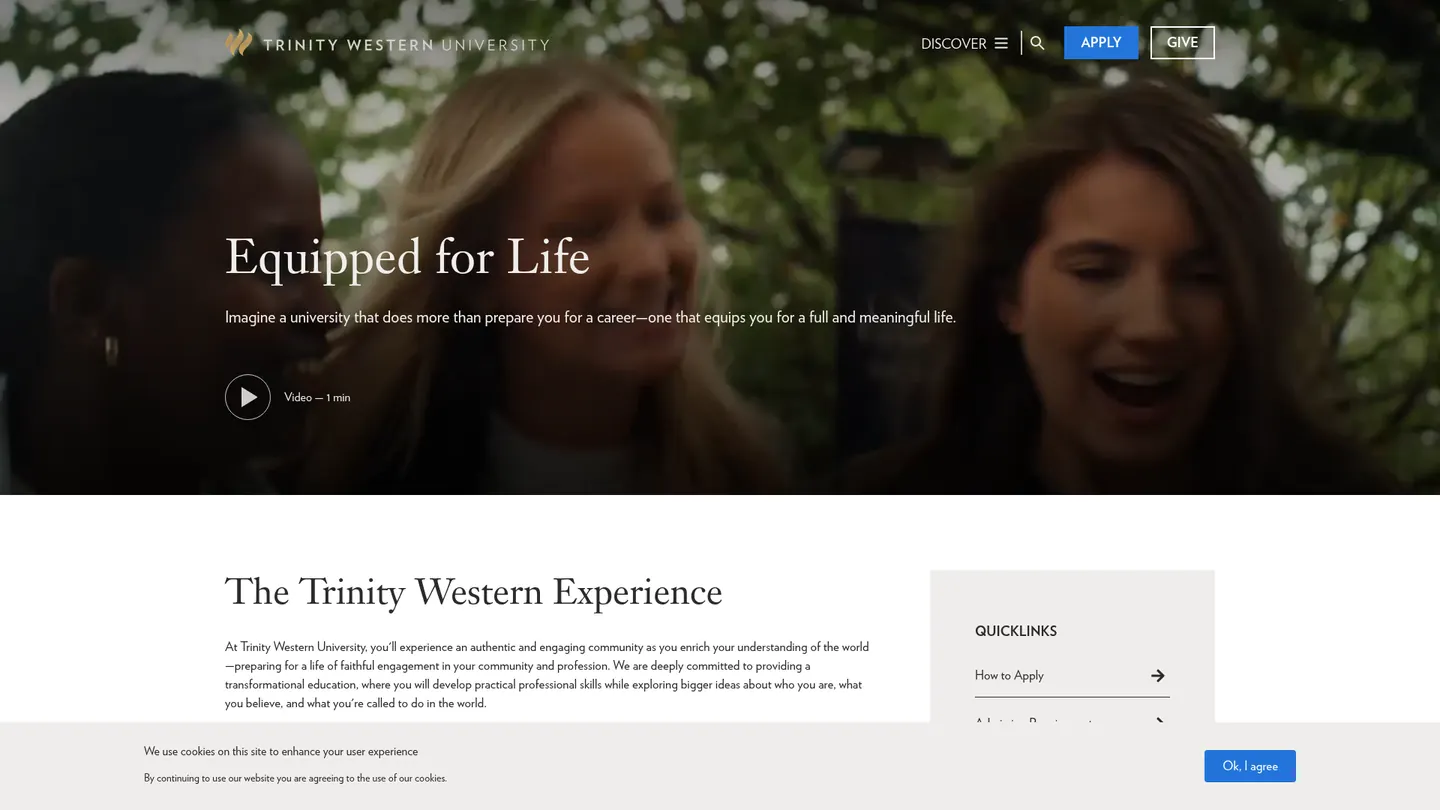
TWU competes for prospective students with universities that spend millions on recruitment sites. The cinematic, video-first design had accumulated accessibility debt: autoplaying hero video without pause controls, brand overlays failing contrast at AA (2.9:1 in places), 60+ program videos with no captions or transcripts, keyboard traps in the mega menu, quicklinks with icon-only labels, and no VPAT to answer procurement questions from partner institutions or federal-funded programs. Baseline Lighthouse accessibility score averaged 71 across top templates.
What we built.
A focused 18-week audit-plus-remediation engagement. Weeks 1 to 6: manual audit against WCAG 2.2 AA across the top 32 templates using NVDA on Windows, JAWS, VoiceOver on macOS and iOS, and keyboard-only testing, plus axe-core and Pa11y automation. Every finding logged with a screen recording and mapped to a WCAG success criterion. Weeks 7 to 14: remediation shipped in small reviewable PRs. Hero video got play, pause, and mute controls, plus a prefers-reduced-motion fallback poster. Brand overlays were retinted to a minimum 4.5:1 ratio without breaking the visual identity. 60+ program videos captioned and transcribed. Mega menu rebuilt with roving tabindex and Escape-to-close. Quicklinks got visible and screen-reader labels. Weeks 15 to 18: VPAT 2.5 authoring, WCAG-conformant accessibility statement, editor training, and CI wiring so future PRs cannot regress core criteria.
Where it landed.
287 unique WCAG 2.2 AA failures closed. Lighthouse accessibility score across the top 32 templates rose from 71 to 97 average. Zero critical or serious axe violations remaining. All 60+ program videos captioned and transcribed. VPAT 2.5 delivered for WCAG 2.2 AA. Public accessibility statement live. The cinematic recruitment experience now works for keyboard, screen reader, and reduced-motion users without any visual compromise.
The work behind the launch.
Each engagement covers strategy, design, build, and post-launch care — orchestrated by a single senior team.
Barriers we had to overcome.
A concise look at the constraints that shaped every decision in the build.
Video-first hero, no controls
The autoplaying cinematic hero video ran without play, pause, or mute controls and offered no prefers-reduced-motion fallback, violating WCAG 2.1.1, 2.2.2, and 2.3.3.
Contrast fails on brand overlays
Signature translucent brand overlays produced text-to-background ratios as low as 2.9:1, failing 1.4.3 across dozens of recruitment pages.
60+ uncaptioned program videos
Program pages embedded high-production-value videos without captions or transcripts, excluding deaf and hard-of-hearing prospective students.
Keyboard-inaccessible navigation
The mega menu could not be operated by keyboard and had focus traps, blocking a large share of screen-reader users from the primary navigation.
What we built.
The pieces that shaped the final build — each tied back to a real business outcome.
Design + accessibility, not either or
Retinted overlays to hit 4.5:1 without changing the brand palette or the cinematic feel. Design integrity preserved, contrast passed.
Reduced-motion as a first-class state
Every animation and video hero has a prefers-reduced-motion fallback. Users who need static content get it automatically.
Captioning workflow, not a one-off
Delivered a repeatable captioning workflow (Rev + human QA) so new program videos launch captioned, not remediated later.
CI guardrails
axe-core and Pa11y in Lighthouse CI so future PRs cannot regress core WCAG 2.2 AA criteria.
What changed.
What changed for the team and their audience after launch — measured in real behavior, not vanity metrics.
- 287 unique WCAG 2.2 AA failures closed
- Lighthouse accessibility score: 71 → 97 average across top 32 templates
- Zero critical or serious axe violations remaining
- 60+ program videos captioned and transcribed
- VPAT 2.5 delivered for WCAG 2.2 AA
- Public accessibility statement published
- Cinematic brand experience preserved end to end
Technology used for the Trinity Western University project
DoodleWeb delivered this engagement on Drupal over 18 weeks. The published project record includes the following platforms, tools, and delivery disciplines.
- Drupal
- Video
- axe-core
- Pa11y
- Lighthouse CI
- NVDA
- JAWS
- VoiceOver
Inside the build.
A few selected screens from the live product.
We were told cinematic and accessible were a trade-off. DoodleWeb proved otherwise. The site still recruits, and now it recruits everyone.
Numbers we are proud of.
Specific, measurable, and pulled from production analytics (not assumptions).
Other Education work, worth a look.
Frequently asked questions about the Trinity Western University project
- What did DoodleWeb build for Trinity Western University?
- DoodleWeb designed and built a new Drupal platform for Trinity Western University in the Education sector. The engagement shipped in 18 weeks and launched in 2024. Scope covered Drupal, Video, axe-core, Pa11y, Lighthouse CI, NVDA, JAWS, VoiceOver.
- Which platform and tech stack was used for the Trinity Western University project?
- Trinity Western University was built on Drupal. The full stack included Drupal, Video, axe-core, Pa11y, Lighthouse CI, NVDA, JAWS, VoiceOver. DoodleWeb selected the stack after a short discovery based on the team's editorial workflow, performance targets, and compliance requirements for Education.
- What problem was Trinity Western University trying to solve?
- TWU competes for prospective students with universities that spend millions on recruitment sites. The cinematic, video-first design had accumulated accessibility debt: autoplaying hero video without pause controls, brand overlays failing contrast at AA (2.9:1 in places), 60+ program videos with no captions or transcripts, keyboard traps in the mega menu, quicklinks with icon-only labels, and no VPAT to answer procurement questions from partner institutions or federal-funded programs. Baseline Lighthouse accessibility score averaged 71 across top templates.
- How did DoodleWeb approach the Trinity Western University build?
- A focused 18-week audit-plus-remediation engagement. Weeks 1 to 6: manual audit against WCAG 2.2 AA across the top 32 templates using NVDA on Windows, JAWS, VoiceOver on macOS and iOS, and keyboard-only testing, plus axe-core and Pa11y automation. Every finding logged with a screen recording and mapped to a WCAG success criterion. Weeks 7 to 14: remediation shipped in small reviewable PRs. Hero video got play, pause, and mute controls, plus a prefers-reduced-motion fallback poster. Brand overlays were retinted to a minimum 4.5:1 ratio without breaking the visual identity. 60+ program videos captioned and transcribed. Mega menu rebuilt with roving tabindex and Escape-to-close. Quicklinks got visible and screen-reader labels. Weeks 15 to 18: VPAT 2.5 authoring, WCAG-conformant accessibility statement, editor training, and CI wiring so future PRs cannot regress core criteria.
- What were the results of the Trinity Western University project?
- 287 unique WCAG 2.2 AA failures closed. Lighthouse accessibility score across the top 32 templates rose from 71 to 97 average. Zero critical or serious axe violations remaining. All 60+ program videos captioned and transcribed. VPAT 2.5 delivered for WCAG 2.2 AA. Public accessibility statement live. The cinematic recruitment experience now works for keyboard, screen reader, and reduced-motion users without any visual compromise. Reported metrics: 287 WCAG issues closed, 71 → 97 Lighthouse a11y score, 60+ Videos captioned, VPAT 2.5 Delivered.
- How long did the Trinity Western University project take?
- 18 weeks. Kickoff to launch, delivered by a single senior team (strategist, designer, engineer, and QA/accessibility lead) with no offshore handoff or junior swap after the SOW was signed.
- Is the Trinity Western University website live and where can I see it?
- Yes. The live site is at https://www.twu.ca. It launched in 2024 and is maintained by Trinity Western University's in-house team, with optional SLA-backed managed support from DoodleWeb.
- Can DoodleWeb build a project like Trinity Western University for us?
- Yes. DoodleWeb specializes in Education builds on Drupal and similar platforms. Every quote is fixed-fee, with a detailed quote within two business days, and staffed by the same senior team that ships it. Book a free 30-minute call at https://calendly.com/doodleweb/30min or email info@doodleweb.io.