
Nonprofit website development for online giving is a specific discipline. It is not general web design with a donation form bolted on. Every technical decision, from CMS to hosting to form platform, either helps or hurts the number that matters: total donors and total dollars this year versus last. Here is the working playbook we use with nonprofit clients in 2026.
What makes nonprofit web development different?
Four things:
- The primary conversion is a payment, not a lead. Speed, trust, and payment options matter more than on almost any other kind of site.
- Traffic is spiky. Giving Tuesday, year-end, and the day after a mass email create traffic patterns most infrastructures fail at.
- The editors are program staff, not marketers. The CMS has to be usable by people whose day job is running programs, not publishing content.
- Trust is existential. A slow page, a broken form, or a jarring redirect does more brand damage on a nonprofit site than on almost any other kind of site.
Which CMS is right for a nonprofit in 2026?
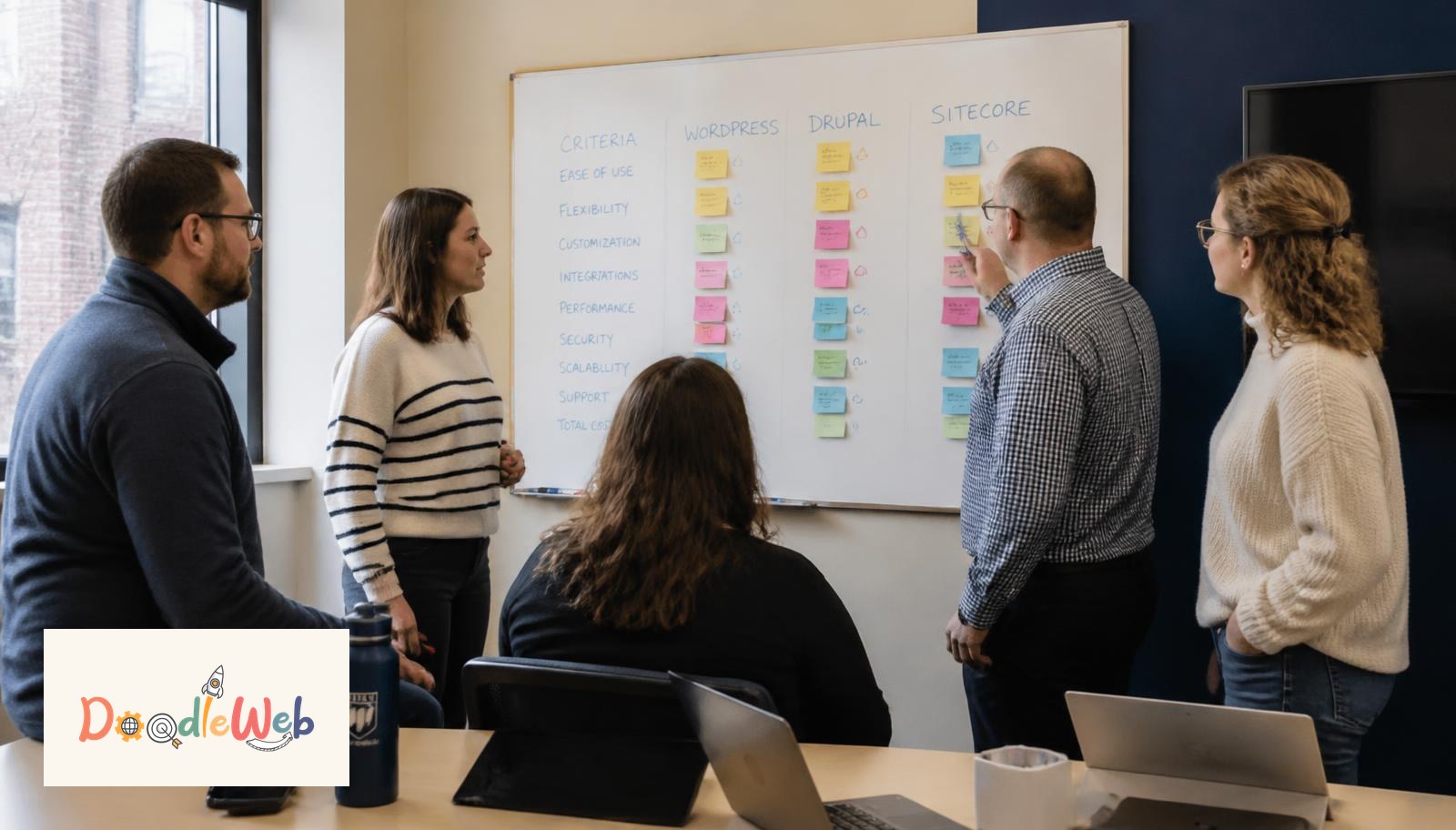
For most nonprofits under $10M in annual revenue: WordPress with a lightweight block theme, managed hosting (WP Engine, Kinsta, or Pressable), and a specialized donation platform (Givebutter, Donorbox, or Fundraise Up) embedded on donation pages. This stack is fast, editable by non-technical staff, well-supported, and affordable to maintain.
For larger nonprofits or federated organizations with 20+ chapter sites: Drupal with a multi-site or dedicated design system, and Classy or a custom-integrated fundraising layer.
For very small nonprofits under $500k revenue with no dev support: Webflow or Squarespace with an embedded Donorbox form is often enough.
What donation platform should we embed?
Depends on your revenue band:
| Revenue | Best fit | Why |
|---|---|---|
| Under $2M | Donorbox or Givebutter | Cheapest per-transaction, fast checkout, easy embed |
| $2M to $10M | Givebutter or Fundraise Up | Best conversion optimization at reasonable pricing |
| $10M+ | Classy, iDonate, Fundraise Up Enterprise | Enterprise features, CRM integration, dedicated support |
How do we design the giving experience?
Six principles:
- Dedicated pages per campaign. Never funnel a specific appeal to a generic donation form.
- Recurring giving as the default. With a clear one-time toggle.
- Smart amount presets. Based on your average gift, not arbitrary round numbers.
- Mobile wallets enabled. Apple Pay, Google Pay, PayPal.
- Concrete impact per amount. Tied to specific program outcomes.
- An inspiring thank-you page. Not a receipt.
How do we handle Giving Tuesday and year-end spikes?
Prepare a week in advance:
- Put Cloudflare in front of your site.
- Pre-warm the cache.
- Load test at 5x expected peak.
- Confirm your donation platform's rate limits and processor's ability to handle a spike.
- Have a rollback plan and an on-call engineer for the four hours around your peak.
Every year we see nonprofits lose their biggest revenue day to a preventable technical failure. A week of preparation eliminates almost all of it.
What about accessibility?
WCAG 2.2 AA is table stakes. Every donation page, form, and confirmation flow must be usable with a keyboard, a screen reader, and low vision. It is both a legal exposure to manage and a real conversion improvement, because accessible pages consistently convert better than inaccessible ones.
How do we integrate with our CRM?
Every donation platform above integrates with the CRMs nonprofits actually use (Salesforce NPSP, Bloomerang, DonorPerfect, Neon, Kindful). The right integration syncs donor records, gift records, and recurring plans in near real time, without duplicates and without staff manually reconciling weekly. Insist on this. A donation platform that requires weekly CSV imports is a donation platform that will drop donors.
How do we know if the site is working?
Four numbers, monthly:
- Donation page conversion rate (target: 8 to 15 percent from organic and email)
- Percentage of donors on recurring (target: 30 percent and climbing)
- Retention of second-year donors (target: 45 percent and climbing)
- Cost per dollar raised online (target: under $0.15)
If any of these are trending the wrong way for two quarters, run the donation website diagnostic.
Where to go next
Read how to improve nonprofit online donations, the nine reasons nonprofits struggle, and the eight things nonprofits need. Or book a free nonprofit website audit.
Seattle agency · Seattle, WA
A full-service digital agency working in WordPress, Drupal, Shopify, Webflow, React, and React Native. We partner with universities, nonprofits, governments, and growing brands to ship sites that hold up after launch.